The First Temptation: Why Man Shall Not Live by Bread Alone
-
by
KLS Admin
Understanding how Jesus overcame the temptation of the flesh and why victory over compromise is essential for genuine Christian revival.
Main Scripture: Matthew 4:1–4
Supporting Scriptures: Matthew 3:13–17; Romans 8:13; 1 John 2:15–17; Colossians 3:5; 1 Timothy 4:7–8.
Introduction: The Foundation of Genuine Revival
What happens when your desire to succeed, survive, or satisfy a personal need conflicts with God’s will? Will you compromise your faith to get what you want, or will you remain faithful to God’s Word? This question lies at the heart of the first temptation of Jesus Christ. Many Christians desire spiritual revival, divine empowerment, and a transformed society. Yet genuine revival cannot be sustained where believers continue to compromise their convictions for money, pleasure, recognition, or personal advancement. The temptation of Jesus in the wilderness reveals a fundamental principle of victorious Christian living: Our commitment to God’s will must never be separated from our commitment to God’s ways. Jesus demonstrated this principle before beginning His public ministry, providing an example for everyone who desires to walk in His footsteps.1. Why Jesus Was Led Into the Wilderness
Following His baptism in the River Jordan, Jesus received the Holy Spirit, and the Father publicly affirmed Him as His beloved Son. Immediately afterward, the Holy Spirit led Him into the wilderness to be tempted by the devil (Matthew 4:1). This sequence is significant. Jesus did not begin His ministry by pursuing recognition, gathering followers, or demonstrating His miraculous power. He first submitted Himself to the leadership of the Holy Spirit. His experience teaches believers that spiritual empowerment does not eliminate testing. Rather, our faith and commitment to God will be tested as we follow His purpose. The sermon emphasizes two essential commitments:-
Commitment to God’s will: Choosing what God desires for our lives.
-
Commitment to God’s ways: Accomplishing His purpose through methods consistent with His character and commandments.
2. The First Temptation: Turning Stones Into Bread
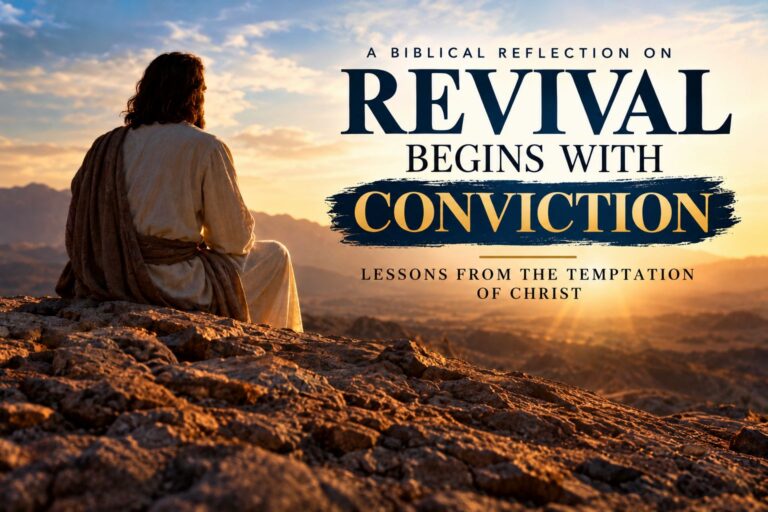
After fasting for forty days and forty nights, Jesus became hungry. Recognizing His physical need, the devil approached Him with a suggestion:“If You are the Son of God, command that these stones become bread.” — Matthew 4:3At first glance, the request might appear reasonable. Jesus was hungry, and He possessed the divine power to perform miracles. But the real issue was not whether Jesus could turn stones into bread. It was whether He would use His power outside the Father’s will to satisfy His immediate personal need. Jesus answered:
“Man shall not live by bread alone, but by every word that proceeds from the mouth of God.” — Matthew 4:4This response established that obedience to God takes precedence over physical appetites, personal comfort, and material necessities. Jesus refused to allow hunger to determine His actions. He demonstrated that even legitimate human needs must remain subject to God’s authority.
3. The Danger of Allowing Our Needs to Control Us
The first temptation is particularly relevant because many compromises begin with legitimate needs. A person needs money to support a family. Another desires marriage, employment, promotion, or financial security. These aspirations are not inherently wrong. The danger begins when fulfilling those needs becomes more important than obeying God. A Christian may be tempted to accept a bribe because of financial difficulties. Another may compromise moral convictions to maintain a relationship or secure a business opportunity. The question is not simply whether we need something, but whether we are willing to disobey God to obtain it. The sermon challenges believers to develop the spiritual courage to reject opportunities that require compromise, regardless of how attractive they appear. If the only way to achieve something is through sin, the believer must be prepared to reject that opportunity. This is one of the most important lessons from Christ’s first temptation.4. The Role of the Holy Spirit in Overcoming Temptation
Overcoming temptation is not merely a matter of personal determination or human willpower. The teaching emphasizes that genuine holiness and spiritual transformation are accomplished through the power of the Holy Spirit. Romans 8:13 teaches that believers must put to death the deeds of the body through the Spirit. This means allowing the Holy Spirit to transform our desires, attitudes, habits, and decisions. The sermon also distinguishes between two forms of fasting: God-ordained fasting: A fast undertaken in obedience to the specific leading of God, as illustrated by Jesus’ wilderness experience. Consecration fasting: A spiritual discipline involving fasting and prayer to help believers submit their fleshly desires to the leadership of the Holy Spirit. Fasting is not presented as an automatic source of spiritual power. Rather, it is a discipline that helps believers cultivate spiritual sensitivity, deepen their dependence on God, and overcome the influence of sinful desires. A life directed by the Holy Spirit becomes increasingly resistant to the temptations that once produced compromise.5. Why Victory Over Temptation Is Essential for Revival
Spiritual revival is more than emotional worship, large gatherings, or public declarations of faith. Its evidence must be seen in transformed lives. A person who professes Christ on Sunday but participates in bribery, dishonesty, or immorality on Monday has not demonstrated the practical transformation that genuine revival demands. The sermon connects this truth to the urgent need for righteousness in Nigeria. A righteous society cannot emerge merely through religious activities. It requires individuals whose convictions influence their conduct in government, business, education, family life, and everyday relationships. Imagine a society where public officials reject corruption, business owners refuse dishonest transactions, and individuals choose moral integrity over personal gain. Such transformation begins when believers overcome the first temptation in their daily lives. Revival becomes visible when Christians consistently refuse to exchange their obedience to God for temporary benefits.6. Choosing Integrity Even When It Is Costly
One powerful illustration from the sermon concerns a woman who accepted an appointment as a federal government minister. Before entering public service, she had been able to afford expensive private schools for her children. However, after taking office, she recognized that her legitimate income could no longer sustain those expenses. Rather than seeking unlawful financial benefits to maintain her previous lifestyle, she withdrew her children from those schools and made more affordable educational arrangements. Her decision demonstrated an important principle: personal comfort and social status must never become excuses for corruption. She chose integrity over convenience. This is the kind of practical righteousness that the first temptation calls believers to demonstrate.7. Living by Every Word That Proceeds From God
The words of Jesus in Matthew 4:4 challenge us to examine what truly governs our lives. Are our decisions driven by the desire for wealth, pleasure, social acceptance, and recognition? Or are they governed by God’s Word? The apostle John identifies the lust of the flesh, the lust of the eyes, and the pride of life as expressions of worldly desires (1 John 2:16). These desires can gradually weaken spiritual conviction when they become the controlling motivations of our lives. However, as believers submit to the Holy Spirit and grow in obedience to Scripture, they become better equipped to resist temptation. Victory is demonstrated not merely by what we profess but by what we refuse to do. It is seen when we reject dishonesty, resist immoral pressure, refuse corruption, and remain faithful to God’s instructions even when obedience involves sacrifice.Conclusion: The First Temptation Is a Call to Uncompromising Faith
Jesus Christ overcame the first temptation by refusing to place His physical needs above the Father’s will. His example reminds every believer that spiritual victory begins with surrender to God. Our needs are real, but they must not become instruments through which temptation controls our decisions. For genuine revival to emerge in our lives, churches, and nation, we must be willing to reject every form of compromise and remain faithful to God’s Word. The first temptation challenges us to make a firm decision: no material benefit, personal ambition, or temporary pleasure is worth sacrificing our relationship with God. A transformed society begins with transformed individuals who choose God’s will and God’s ways, regardless of the cost.Latest Posts
- The First Temptation: Why Man Shall Not Live by Bread Alone
- The First Temptation of Jesus Christ
- Your Kingdom Come, Your Will Be Done
- Rediscovering the Power and Purpose of Prayer
- Handling Conflict: How Couples Can Have Difficult Conversations God’s Way
- Who Is My Neighbor? The Call to Love Beyond Boundaries
- What Jesus Did: Raising People Who Look Like Christ
- Scars That Remain After Forgiveness
- Dealing With the Inside Job: Confronting What Is Hidden Within
- Representing God’s Kingdom in Everyday Life
- Resolving Marital Conflicts God’s Way
- Dealing With the Pressures of Life: Trusting God When You Don’t Understand
- Living With a Sense of Destiny
- Appearance Christianity: When Faith Becomes a Performance
- The Beatitudes on the Plain: A Call to True Transformation
- The Mind of Christ: Embracing Humility, Love, and the Kingdom of God
- Navigating Widowhood
- How to Pursue Your Divine Purpose with Endurance and Eternal Focus
- The Life-Transforming Miracle: How Divine Encounters Change Destiny Forever